

How to measure the space needed for a steel lateral filing cabinet?
Nov 27, 2025
Leave a message
Hey there! I'm a supplier of Steel Lateral Filing Cabinets, and I've seen firsthand how important it is to measure the right space for these bad boys. You don't want to end up with a cabinet that's too big for your office or one that's too small to hold all your files. So, let's dive into how you can measure the space needed for a steel lateral filing cabinet.
Why Measuring Space is Crucial
First off, why bother with all this measuring? Well, it's simple. A well - measured space ensures that your filing cabinet fits seamlessly into your office layout. It also helps in making the most of your available space. You don't want to waste precious floor space or have a cabinet that sticks out awkwardly, creating a safety hazard or an eyesore.
Step 1: Determine the Available Floor Space
The first thing you need to do is take a good look at the area where you plan to place the filing cabinet. Use a tape measure to measure the length and width of the floor space. Make sure to measure from wall to wall or from any other fixed points that will define the boundaries of the cabinet's placement.
For example, if you're planning to put the cabinet against a wall, measure the length of the wall where it will sit. Also, consider any obstacles like electrical outlets, baseboards, or furniture that might interfere with the cabinet's placement. You need to account for these when measuring the available width.
Step 2: Consider the Cabinet's Dimensions
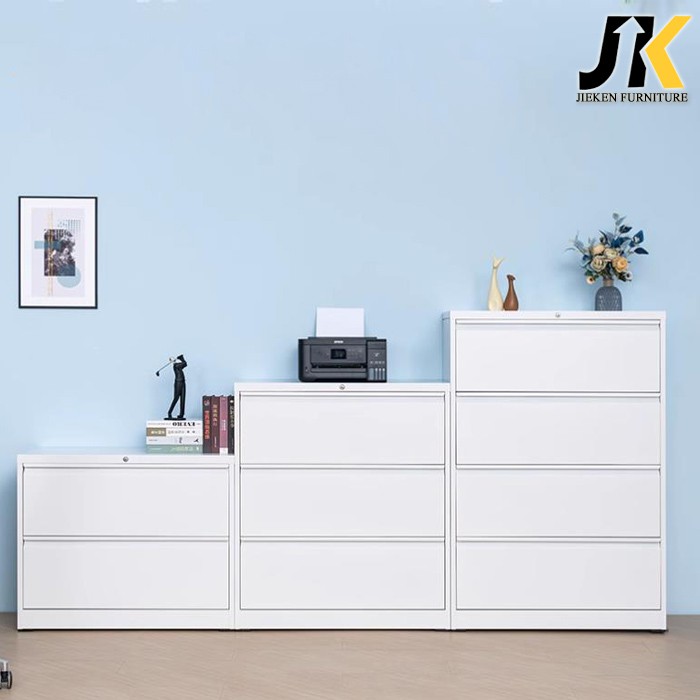
Now, let's talk about the cabinet itself. Steel lateral filing cabinets come in different sizes. The most common ones are the Lateral 2 Drawer Filing Cabinet, which is a great option for smaller offices or those with less filing needs. Larger cabinets may have more drawers and be wider and taller.
Check the product specifications of the cabinet you're interested in. The manufacturer usually provides the length, width, and height of the cabinet. Make sure to note these down. You'll need to compare these dimensions with the available floor space you measured earlier.
Step 3: Account for Opening Space
Don't forget that you'll need space for the drawers to open. When a drawer is pulled out, it extends beyond the front of the cabinet. Measure how far the drawers will extend when fully opened. This will depend on the design of the cabinet.
You need to make sure that there's enough space in front of the cabinet for the drawers to open without hitting any furniture or walls. A good rule of thumb is to leave at least 18 - 24 inches of clear space in front of the cabinet for easy access to the drawers.
Step 4: Think About Vertical Space
In addition to floor space, you also need to consider the vertical space. Measure the height from the floor to the ceiling. Some cabinets are quite tall, especially if they have multiple drawers. You need to make sure that there's enough clearance above the cabinet.
If you have a low - ceilinged office, you might need to choose a shorter cabinet. On the other hand, if you have high ceilings, you can go for a taller cabinet to maximize storage space.
Step 5: Plan for Future Expansion
It's always a good idea to think about the future. If you expect your filing needs to grow in the coming years, you might want to leave some extra space around the cabinet. This way, you can easily add another cabinet or replace the existing one with a larger model if needed.
Comparing with Other Filing Cabinet Types
You might also be considering other types of filing cabinets, like the Steel Vertical Filing Cabinet. Vertical filing cabinets have a different layout compared to lateral ones. They usually take up less floor space but may require more depth.
The Metal Lateral Filing Cabinet is similar to the steel one but might have different weight and construction. When comparing these options, make sure to measure the space requirements for each type carefully.

Making the Right Decision
Once you've measured everything and compared the cabinet dimensions with the available space, it's time to make a decision. If the space you measured can comfortably accommodate the cabinet, including the opening space and future expansion, then you're good to go.
But if the space is a bit tight, you might need to either choose a smaller cabinet or rearrange the area to create more room. Remember, it's better to be patient and get the measurements right than to end up with a cabinet that doesn't fit properly.
Contact Us for Your Filing Cabinet Needs
If you're still unsure about the space requirements or need more information about our Steel Lateral Filing Cabinets, don't hesitate to reach out. We're here to help you make the best decision for your office. Whether you're a small business owner or part of a large corporation, we have the right filing cabinet solution for you.
References
- General knowledge of office furniture layout and filing cabinet design.
- Product specifications from various steel lateral filing cabinet manufacturers.